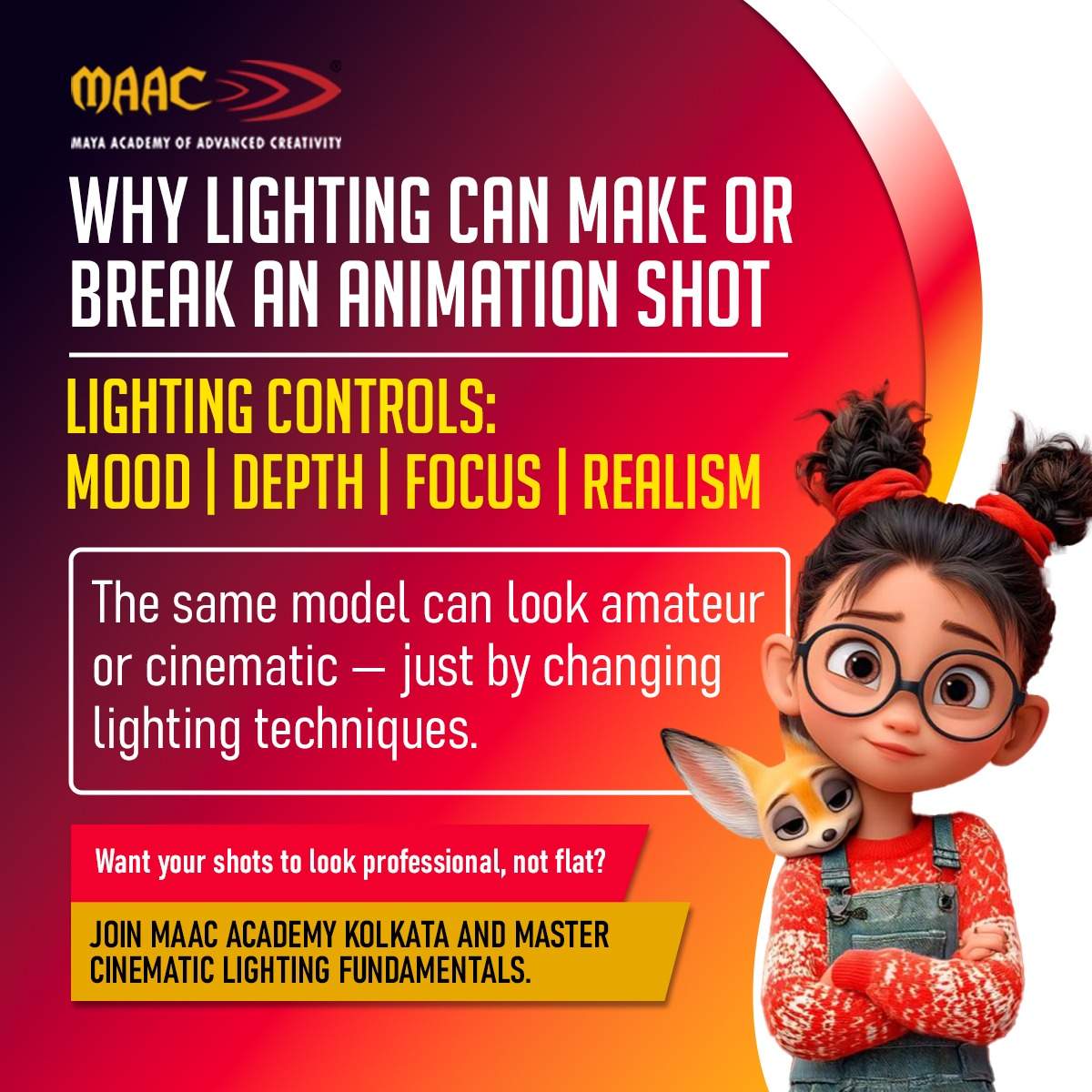
Lighting is the key element when it comes to animations, as it affects the overall quality of an image in ways that transcend design, modeling, or movement. Lighting brings everything to life, and it is all about how the viewer experiences the scene, as well as how it adds to the overall mood and visual impact of the scene. Lighting is not just important but vital, especially when it comes to rendering the emotional integrity of an intricate scene. Without effective lighting, even the best-crafted animations can feel flat. If you want to understand the importance of lighting in animation, animation courses in Kolkata can help you.
Animation lighting does more than simply provide lighting for the characters. It directs the viewer’s eye, establishes the setting, and provides depth to a scene, realistic or otherwise. Outstanding lighting can evoke atmosphere, emotions, and moods to propel action. An well-lit scene can transform a mundane action into a beautiful spectacle, or draw the viewer out and detract from an otherwise good film.
Various Reasons Lighting Can Make or Break an Animation Shot
Lighting plays an essential role in the world of animation. Lighting contributes to the overall feeling, look, and telling of an animated scene. Animation, even at the highest levels, can fail to move an audience without proper lighting considerations.
- Sets the mood and atmosphere
Lighting is an essential part in building up a scene’s mood. Warm lighting feels cozy and romantic, while harsh shadows and cool colors create tension and mystery. When done well, lighting enhances animated scenes and makes them feel emotional. Without good lighting, even the best animations can seem flat and disconnected. With the help of the best animation academy in Kolkata, you can understand the necessity of lighting in animation.
- Enhances depth and dimension
Lighting is very important for visually creating a story. It helps show the relationship between light and shadow. That contrast is what brings depth and dimension to objects, helping them feel more life-like and real. Good lighting can change a scene, bringing characters and settings to life. If lighting is poorly executed, characters can look flat and lifeless, making the scene feel incomplete and inauthentic.
- Supports storytelling
Lighting plays an important role in showing a character’s emotional journey. When there is a transition from shadow to illumination for a character, it often means growth and learning. In addition to making visual elements more vivid, mindful lighting design can support the narrative’s thematic core.
- Creates realism or stylization
Lighting is very important for determining the mood of a project.It can make a scene feel incredibly realistic or give it a specific vibe. Smart lighting techniques build mood and lead the eye to certain details, guiding how viewers respond and what they notice to help the artist realize their vision.
- Affects color perception
Lighting is very important for how we see colors on screen. Good lighting helps show character designs clearly, while poor lighting can change colors and make them look muddy. Lighting that is off the mark will disrupt any connection between the appearance of the characters and the emotive qualities that are being represented by those appearances. However, if the lighting is done well, then the colors become vibrant with brightness.
Conclusion
Lighting is important, allowing animation to work. It dictates the mood and depth, helps the viewer to direct where they should look, and reinforces the narrative. Poor lighting flattens even the strongest animation, sucking the punch out of it. Lighting, if done with care, can elevate a scene into something truly captivating, enhancing both the quality and emotional impact of an animation.